Screen your water
for microplastics

Plastisense is a compact device in development for screening water samples for microplastics

Plastisense CAD model
Scroll to explore

Plastic particles can be too small to see

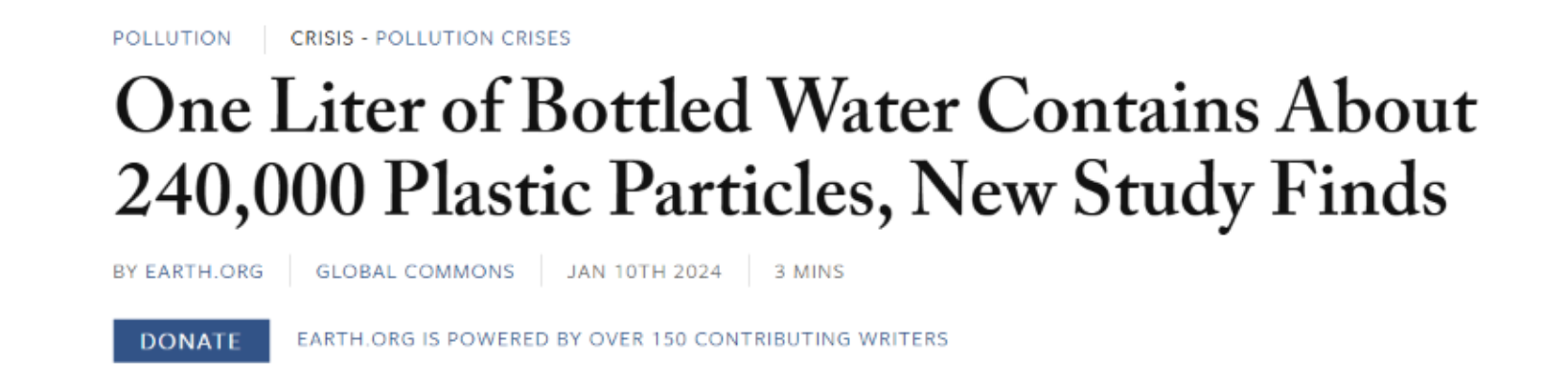
A 2024 study of three bottled-water brands estimated an average of 240,000 plastic particles per liter. About 90% were nanoplastics. Plastisense is being developed to screen for larger particles using fluorescence

Earth.Org headline reporting a study of plastic particles in bottled water
Earth.Org · January 10, 2024Read the articleRead the study

How fluorescence
reveals particles

The proposed test captures particles on a membrane, then images them under blue light

Prepare the sample

The workflow uses 100 mL of water. Keep volume and handling consistent when comparing samples

100 mL of water

The operating protocol and device performance are still being validated

Download the project brief
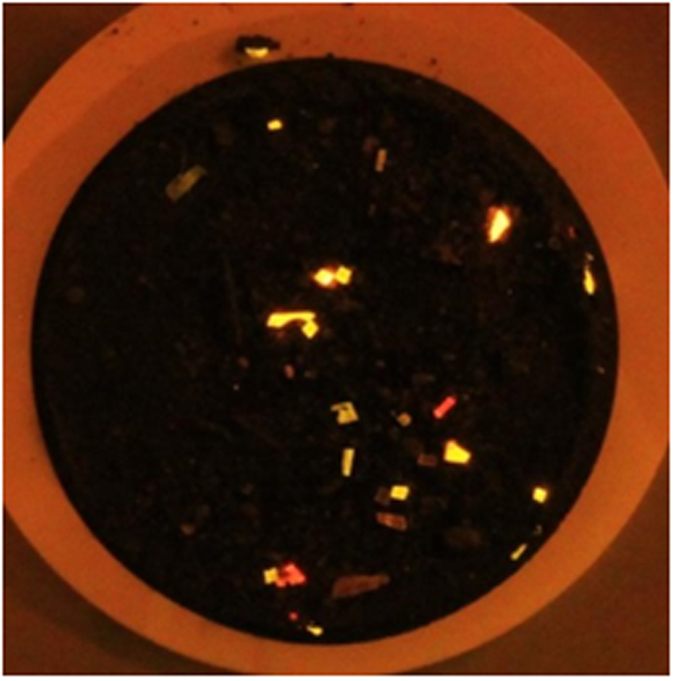
Fluorescence image of a membrane carrying stained plastic fragments from prepared marine sedimentPublished fluorescence image
Research example from Maes et al. (2017) Prepared marine sediment with added plastic fragments after Nile Red staining View figure 1 · CC BY 4.0
Planned test cycle
  1. Filtration, 5-10 minutes
  2. First air purge, 1-2 minutes
  3. Dye dosing, about 10 seconds
  4. Incubation, 10-15 minutes
  5. Second air purge, 2-3 minutes
  6. Imaging, about 10 seconds
  7. Gravity drainage to the waste cup
Target cycle time is 30-35 minutes. The times are design estimates

Reading a
screening result

A fluorescent spot is a candidate for further investigation. Accuracy, repeatability and false-positive rates are part of the validation work

01

Candidate countThe intended result is the number of particles detected as candidates in a sample

02

Polymer identificationChemical confirmation requires a reference method such as spectroscopy

03

Drinking-water qualityWater safety, other contaminants and nanoplastics require separate tests

Comparing tap
and filtered water

A controlled comparison starts with consistent sampling, preparation and imaging

Sample capture and water treatment

The cartridge membrane collects material for observation. A drinking-water filter serves a separate treatment purpose

  • Use the same sample volume before and after filtration
  • Record the water source and the filter used
  • Assess imaging sensitivity separately from membrane pore size
Study planning guidance for a proposed screening workflow

Device specifications
at a glance

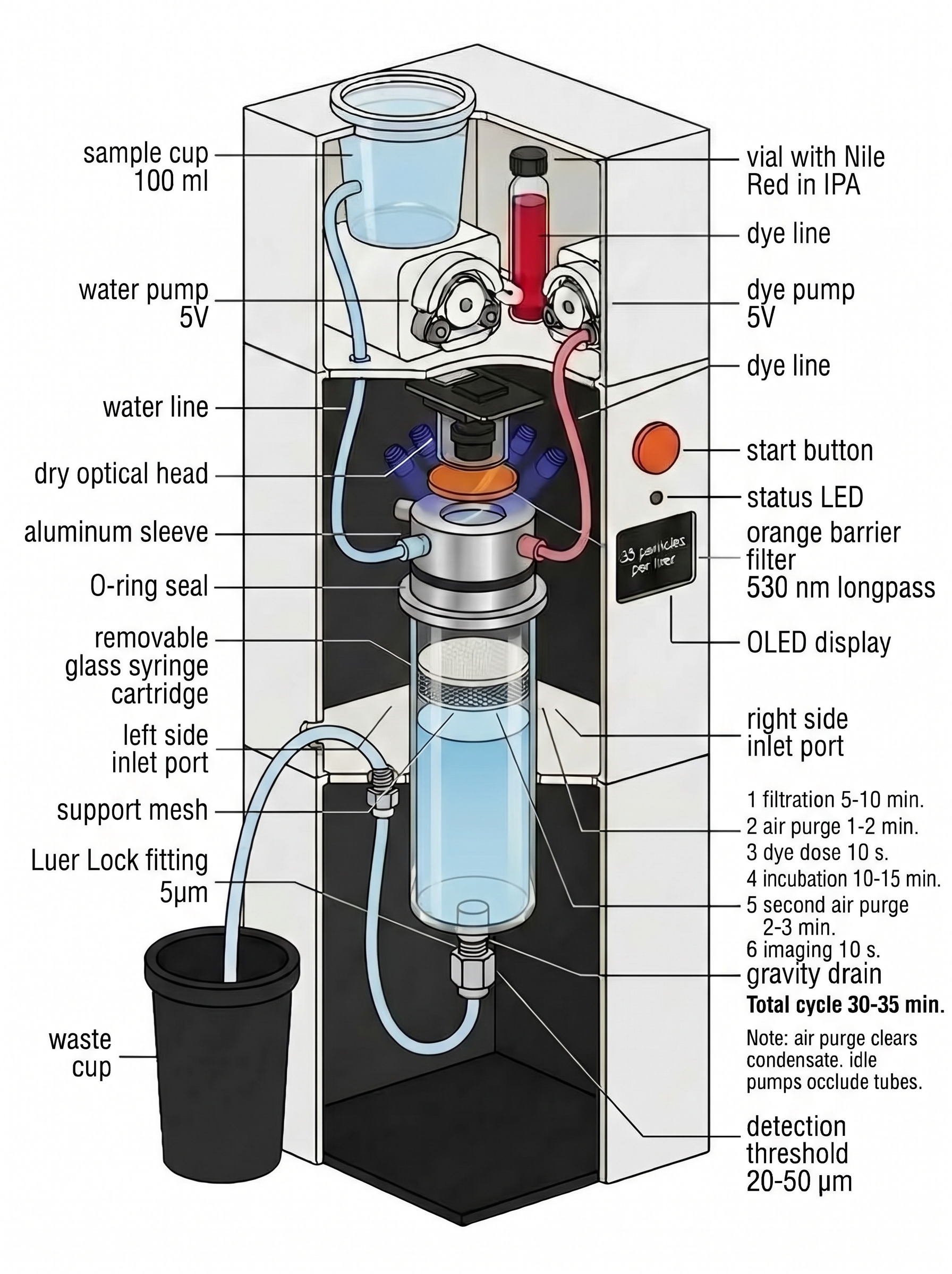
Four assemblies handle the sample, image the membrane, collect particles and drain the liquid

Explore the device
View the annotated designView the annotated design

Original team drawing. The display reading is an example and the illustrated detection range is a design target

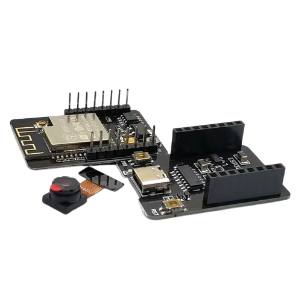
ProcessingESP32-CAMFirmware and image capture

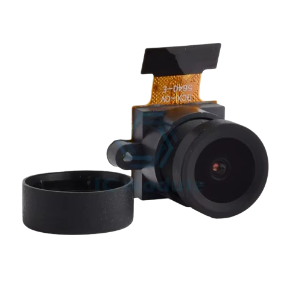
ImagingOV5640 · 5 MPMacro-focused M12 optics

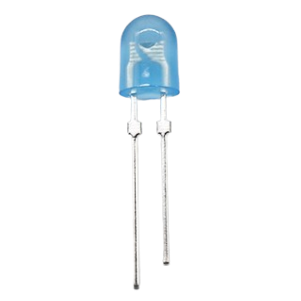
Illumination450-470 nm blue LEDsNile Red excitation

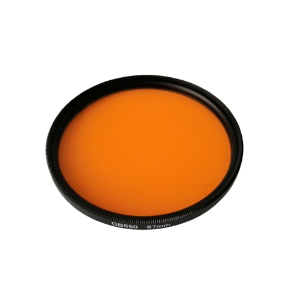
Optical filtering~530 nm long-pass filterFluorescence imaging

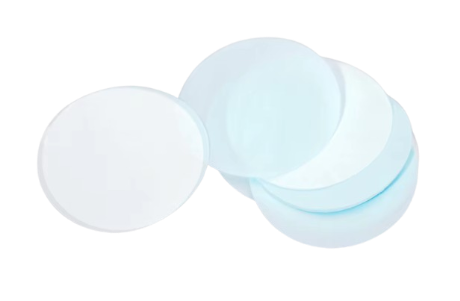
Sample capture25 mm PTFE membrane5 µm nominal pores

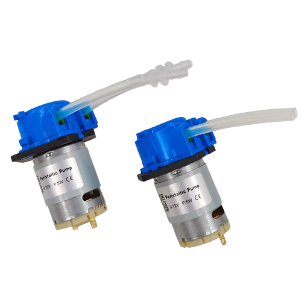
Fluid handlingSeparate 5 V pumpsWater and dye lines

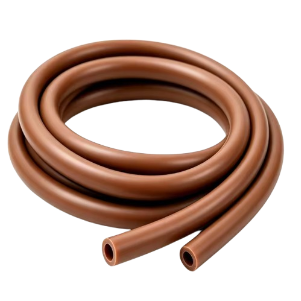
Pump tubingFKM tubingPlanned for the peristaltic pump head

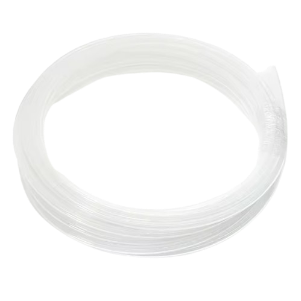
Fluid linesPTFE tubingPlanned for the water and dye lines

Reducing plastic in the sample path

We plan to replace conventional plastic inside the device with glass or metal wherever possible and use FKM and PTFE where tubing is needed. The goal is to reduce particles shed by the device and background fluorescence after Nile Red staining

  • Glass syringe

    Replace the plastic syringe body with glass

  • Custom aluminium cap

    We chose to build the cap from custom aluminium parts instead of 3D printing it

  • FKM pump tubing

    Use a flexible fluoroelastomer tube where the pump rollers squeeze it

  • PTFE fluid lines

    Replace standard food-grade tubing with PTFE for the water and dye lines

We plan to run blank samples through the new materials to check for shedding and background fluorescence

Plastisense device
and refills

Request the device or select a refill below. The team will confirm availability and delivery details

Plastisense device

1 desktop device

$150

Filter Cartridge 5-Pack

5 filter cartridges

$12.00
Best value

Filter Cartridge 10-Pack

10 filter cartridges

$19.00

Nile Red Stain Dropper

30 mL · About 30 tests

$15.00

Starter Refill Bundle

10 filters + one 30 mL bottle

$29.00

Prices in USD

Plastisense

Classroom and
research pilots

We are refining the prototype and planning reference tests and a five-device school pilot in Almaty. Educators, labs and early supporters can register their interest

Frequently asked
questions

How do I request a kit or refills?

Choose a product and submit your contact details on this site. The Plastisense team can follow up about availability, delivery and next steps

How much water and time does a test need?

The design uses a 100 mL water sample and targets a 30-35 minute cycle. The operating cycle is still being validated

Do I need a separate microscope?

The prototype includes a camera and close-focus optics to image the membrane. A lab method is needed to confirm which particles are plastic

What does the 5 µm specification mean?

It is the nominal membrane pore size. Optical resolution, staining and sample preparation also affect the validated detection limit

Can I identify polymers or detect nanoplastics?

The device is designed to count candidate particles. Polymer identification and nanoplastic measurements require separate methods

Can the result tell me if the water is safe?

Drinking-water safety requires appropriate water-quality tests. This workflow screens for fluorescent candidate particles

Can I compare tap water and filtered water?

Use equal volumes, consistent preparation and imaging, repeat samples and procedural blanks. Compare candidate counts under the same conditions

Can I test cloudy or colored water?

Cloudy samples can clog the membrane, and color or organic matter can interfere with imaging. Start with clear water samples while the workflow is being validated

Why might two tests of the same water give different counts?

Particles may be unevenly distributed, and handling can introduce contamination. Repeat the test with the same sample volume and preparation, and use a blank run to check the background

Research references

These papers explain fluorescence screening and microscope calibration. Plastisense is developing its own validation protocol

Maes et al. (2017) · Nile Red screening of microplastics↗Microscope calibration and detection limits (2023)↗